


Maximum 6 people per camping pitch
Welcome to the 5-star campground
of the Château de Chanteloup
An exceptional campsite near Le Mans in the Sarthe
Château de Chanteloup’s campsite, hidden behind tall walls of greenery, isn’t just a campsite – it’s yours.
A place like no other, Chanteloup is a domain you’re delighted to return to year after year- just like coming back to your own holiday home, generation after generation. Warmth and friendliness come naturally here, both from the welcoming owners and their loyal “Dream Team” of seasonal staff. Their deep connection to the estate gives this premium campsite, certified Qualité Tourisme and Camping Qualité, its truly unique atmosphere.
Set among roses and hydrangeas, pitch your tent, caravan or motorhome and enjoy the generous space and the peacefulness as soft as the wind. If this is your first time discovering this magical place near Le Mans, it’s no surprise – it’s the region’s best-kept secret! Let yourself be charmed by its beauty, the endless views over preserved nature, its 21-hectare wooded park and its fishing pond.
In addition to its spacious, nature-facing pitches with no overlooking neighbours – including forest cabins, fully equipped lodge tents and luxurious glamping tents – the estate also offers characterful gîtes located in the Orangerie and the château’s outbuildings.
Majestic century-old trees, a self-service vegetable garden, a heated outdoor pool in high season… the estate offers the very best of château life in all its natural splendour.
We offer 5-star services: a cosy bar, a friendly restaurant, takeaway meals, a local grocery shop, a weekly farmers’ market, and fresh bread delivered every morning by the village baker…
And if you’re travelling with a pet, dogs are of course welcome – and they stay for free!
When it comes to activities, the options are endless—and guests are often invited to take part!
We can’t wait to welcome you – and we hope Chanteloup will become your home away from home.
The camping pitches and amenities
of Chanteloup campsite


Whether you’re an old-school camper with a backpack and a tent, a fan of luxury motorhomes and caravans, or a devoted cocooning enthusiast looking for elegant or unusual accommodation, Chanteloup is the perfect match for you.
Nature lovers and adventurers at heart, we offer exceptional options: extra-large pitches, woodland cabins, glamping tents, characterful gîtes, and safari lodge tents.
It’s up to you to choose the nest that suits you best for your holiday!


Our latest news
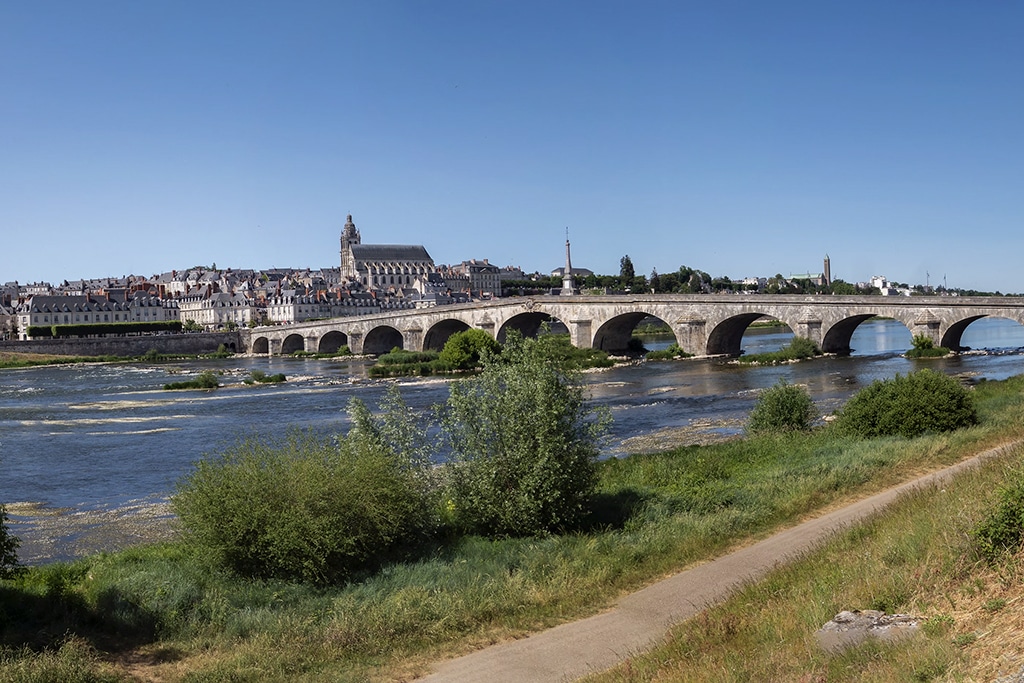
Three tips for an incredible family holiday to France
France is one of the most appealing global destinations for families seeking all different kinds of holiday experiences. From the…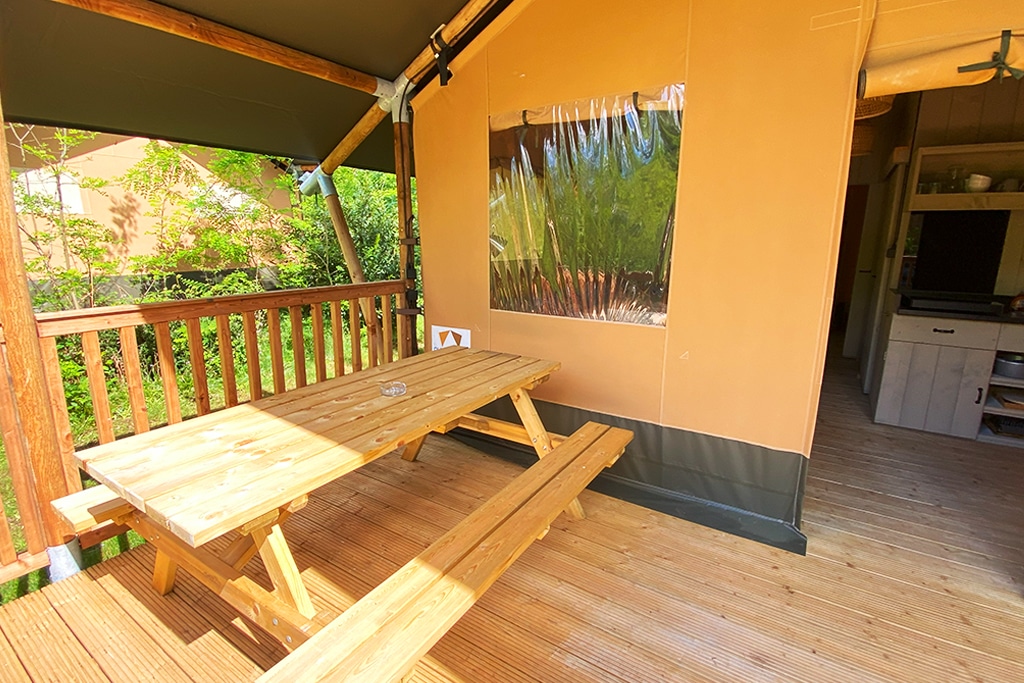
An unusual experience near Paris in an authentic lodge tent at the Chanteloup campsite
Looking for an outdoor adventure and a breath of fresh air? Are you looking for an island of tranquillity in…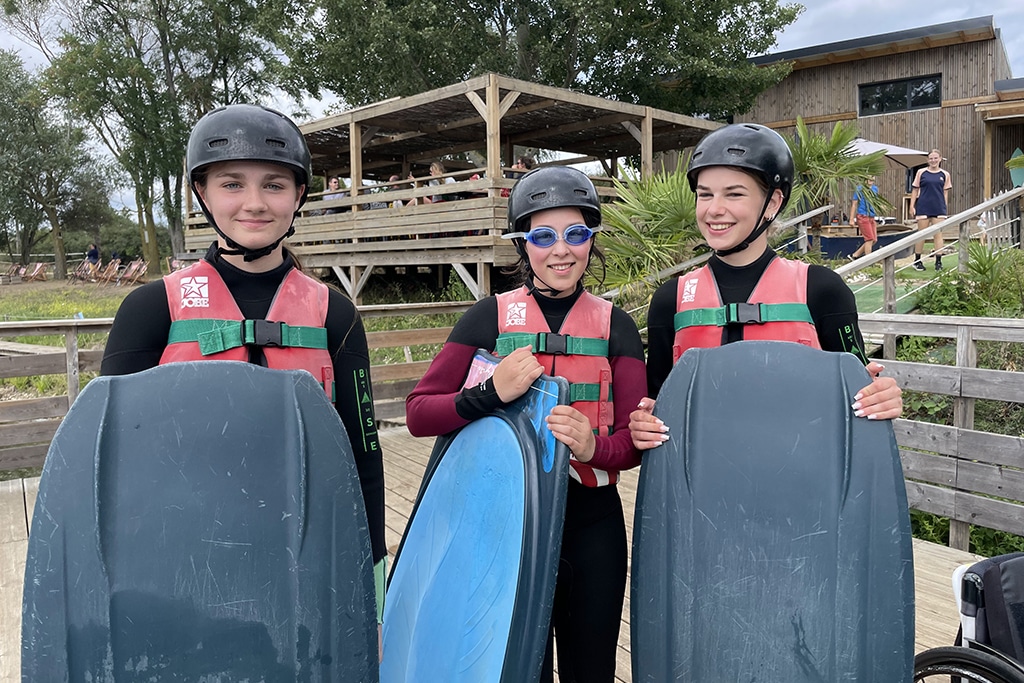
What tourist activities are available in Sarthe?
The Sarthe offers a multitude of opportunities for those looking for a cultural,, sporting or relaxing break !With its natural…


The swimming pool at the Chanteloup campsite, the place to be this summer!
The swimming pool at our 5 star campsite near Le Mans in the Sarthe is an outdoor pool in full sun. Surrounded by flowers and large trees with a lovely lawn to lie on, it’s really charming.
If you want to discover it, it’s here!


The photo gallery of the Chanteloup campsite


5-star services at Chanteloup campsite
Le Mans 24 Hours 2026
10 – 14 June 2026

Year 2026, the theme of the evening is :
“Motor Race”
Le Mans Classic 2026
2 – 5 July 2026

Year 2026, the theme of the evening is :
“Gold and Silver”
The activities and events at Chanteloup campsite
Onsite activities in Chanteloup
Different types of activities for young and old are possible, depending on the weather : bicycle rides, swimming, fishing, table tennis, football, boating on the pond, walks along the horse trails … and each week we organize games with willing guests that suit all tastes and talents !
Day trips outside of Chanteloup
We offer several kinds of outings that are fun and engaging : canoeing, karting on the famous track of the 24 Hours of Le Mans race, paintball, acrobranche (rope course in the trees), golf, horseback riding… there is also the Boulerie Jump 5 minutes away or the Tépacap Adventure & Leisure Park, enough to keep you busy during your stay !

Fishing
Fishing is always a winner at Chanteloup with multitudes of tench, roach and carp to catch. You will enjoy beeing in the middle of the lake surrounded by water lilies on your rowboat.

The Kids Club
From 10:30 AM, a variety of creative games are offered daily from July 15 to August 20 (dates may vary depending on attendance), supervised by one or two bilingual facilitators.

Outdoor games
A soccer field and volley-ball courts are there for you to enjoy, as well as a fitness area to maintain one’s physique ! You can also test yourself against others in table tennis, or play a round of pétanque.

Varied soirées
During high season, the whole team organizes evening events, often with the help of well-motivated guests. These include the famous BBQ and other themed parties that focus on good times for all ages.
Tourism around the Chanteloup campsite, in the Le Mans region, Sarthe
The Sarthe region is a wonderful land that is full of surprises ! It includes little villages typical of the Pays de la Loire, castles, archeological sites, numerous historical monuments and museums, zoos, hiking trails… not to mention the famous 24 Hours of Le Mans race, considered one of the most prestigious automobile races in the world. To help you explore the surrounding areas, we’ve created over a dozen itineraries for you to follow, or not ! You are of course free to chart your own path ! The charming towns, fortified churches, and châteaux are there for you to discover. 30 minutes away is the commune of La Ferté-Bernard, known as the « Venice of the West ». There, you can take electric boat tours on the canals, or visit the château de Montmirail with its impressive fortress walls.
> Read more


History of château de Chanteloup

The Château de Chanteloup has only been named after the hamlet in which it is located for about forty years. Prior to that, it was called Château de Boisrier in reference to the historical name of the place, the fief of Boisrier.
The fief of Boisrier
Known sources concerning Boisrier date back to the 15th century: around 1400, the fief of Boisrier was owned by Jean Tibergeau, a nobleman from a large family in the Maine region. In 1493, the fief belonged to the Viscount of Bresteau who used it to organise the “Pledz”, a sort of local court, of his fief of Sillé-le-Philippe. On 14 June 1504, he sold Boisrier and the fiefs attached to it to a certain Master Francboucher who died in 1555, leaving his wife Jehanne Tiburgelle as sole heir to the fief’s cens (income).
At the beginning of the 17th century, the estate passed into the hands of Etienne Godfroy, Sieur de Boisdoublet and now Lord of Boisrier. Overwhelmed by financial problems and refusing to pay his debts, his property was seized in 1614. On 6 June of the same year, a nobleman by the name of Maître Françoys Le Pelletier, King’s Councillor in his Parliament and Dean of the Chapel of Saint-Julien in Le Mans, purchased the property for the sum of 7,600 livres. This new owner, who belonged to a family renowned in the French judiciary, now owned a substantial estate, combining the seigneuries of Passay and Boisrier.
At the end of the 17th century, in 1689, the fief of Boisrier changed owners again. Magdelaine Lair and her husband Sir Pierre Hessein were the new owners. The latter, a former secretary to Anne of Austria, held “plaids and assizes” in the Boisrier wine press as well as in the seigneurial house. This is the very first known mention of the presence of a house in the Boisrier fiefdom. Located near the pond, it is today what we call the Orangery.
Around 1700, the estate passed into the hands of Louis-Nicolas-François Maurin, squire and adviser to the Court of Aides in Paris, and his wife, Renée Lair, daughter of the Lord of Passay, Jacques Lair. On their death, it was the turn of their son, Nicolas Guillaume Maurin, to inherit these lands as well as those of Passay. In 1730, the latter, now lord of the two estates, had to pay tribute to the nuns of the Visitation of Le Mans. It was probably during these decades that the former feudal manor was transformed into a farm and a small building was added on the west side, intended to serve as a greenhouse.
The Maurin family already owned the seigneury of Passay and had no use for the noble house near the pond. However, the famous Cassini map, the first topographic and geometric map representing the whole of the kingdom of France, continues to locate this house until the end of the 18th century. Nicolas Maurin, married to Jeanne Bosc in January 1748, had a son with her named Jean-Baptiste Ogier d’Ivry, who became Grand Audiancier de France. The Ogier d’Ivry family is still present today in the Sarthe and owns the Chaine de Coeur castle in Saint-Pavace.
On the Ogier d’Ivry account:
> Pantheon of the Legion of Honour by Théophile Lamathière
> More…
The construction of the castle in 1814
At the beginning of the 19th century, the Countess d’Ogier, whose name was Marie Louise Eynaud, born in Paris on 18 January 1763, had the present château built. As the eldest son already owned the château de Passay, the château de Chanteloup was intended for his second son, Gérault Suzanne Achille, born on 7 March 1790. The concordance of the architectural styles suggests that the adjoining farmhouse dates from the same period, or even slightly later.
In 1825, Viscount Achille enlarged the estate by adding the bordage of La Bellanderie, situated to the south, on the other side of the road. Research carried out in 2008 by representatives of the Perche Sarthois showed that the configuration of the site and the park had changed considerably: the land register shows that at the beginning the castle was framed by two buildings, of which only two thirds of the southern barn and the outbuildings remain, as well as a network of rural roads very close to the house. The d’Ogier family obtained the decommissioning of these roads after 1837, the route of which is no longer detectable, and undertook works: the southernmost building was demolished, the farmhouse was built and the wooded part of the park was greatly increased and embellished with bridle paths. These improvements to the grounds betray a real desire for family intimacy.
The Viscount d’Ogier died at Boisrier on 16 February 1838. Historians report that he was not known for his intellectual abilities, but that he was nevertheless appreciated for his thoughtfulness and his lively salons. At his death, the lands of Chanteloup consisted of the castle and the reserves, as well as three farms, four bordages and the mill of Brastelet. His widow, Adélaïde de Pantiguy, died two years later, leaving the estate and the castle to be divided between her two children. Considered by the chroniclers of the time as “one of the prettiest houses in the country”, the castle and the estate were considerably enriched by the Ogier family.
The son, Alfred, the new Viscount d’Ogier, inherited the castle but also La Brosse, La Bellanderie and La Vinaudière. Determined to develop the estate, he had the pond dug out and in 1843 he converted the old feudal manor into an Orangery by means of an architectural rebalancing in the romantic and neo-gothic spirit that was in vogue at the time. At first sight the building looks like a chapel, but this function is contradicted by the absence of an altar, replaced by a fireplace.
In 1857, Captain de Tascher bought the castle from the Viscount of Ogier. Following this acquisition, a conflict* arose concerning the pews in the village church reserved for the Boisrier estate, the Viscount wanting to retain the privilege of sitting on the famous red velvet pews. A crazy procedure followed, involving the arbitration of the Bishop of Le Mans who then decided to give the pews to his cousin Gustave Ogier, owner of the Vauguérin castle, located near Bonnétable.
The marabout
The marabout, a small Moorish-style building at the bottom of the Chanteloup grounds, was built in the second half of the 19th century by Captain Tascher or one of his successors. No doubt sensitive to Arab art, this type of architecture must have caught his attention when he was serving a French colony in North Africa.
Chanteloup and the War of 1870
During the War of 1870, when France was engaged against Prussia, violent fighting took place on 10 and 11 January in the Chanteloup woods and on the road. Dozens of combatants died and were buried under the war memorial at the exit of the estate. At that time, the castle was used as a field hospital, a necessary function that allowed it to avoid being sacked.
About the 1870 war:
> Colonel Emile Bujac, mobilised, Corps Francs of the Gironde
> History of the Franco-German war 1870-71, battle episodes by Amédée Le Faure
At the dawn of the 20th century
Around 1885, Count Octave de Neuflieux and the Countess, née Berthe de Vannoise, acquired the Boisrier estate. The new owners were very wealthy and lived a lavish lifestyle, maintaining the castle and the surrounding grounds to a high standard. A postcard (fig.1) illustrates the lifestyle and operation of the château at that time: there were many servants working there under the authority of the steward for the men and the woman in charge for the women. They were all housed on the premises and numbered about fifteen: valets, gardeners, coachmen, cooks, linen maids and chambermaids made up the domesticity of the great residence.
Sale of the furniture of the Château de Boisrier, 1889 :
> Le Figaro
Notarial announcements, sale of the Château de Boisrier :
> 1889 Le Figaro
> 1890 Gil Blas newspaper
> 1890 Le Figaro
> 1890 Le Figaro 2
Baron de Vannoise, château de Boisrier :
> Le Gaulois, useful information
> Le Figaro, social notices
Some anecdotes About the Neuflieux :
> Le Pêle-Mêle, weekly humoristic newspaper
> Le Figaro, worldly travels…
The entrance pavilion
The entrance pavilion, which is located at the service entrance to the castle, was built by the Neuflieux family. It is possible to see their coat of arms on the top of the entrance gate with the motto: “Rather death than decay”.
In 1905, the law on the separation of Church and State led the Countess of Neuflieux to create a public school in the current commons, which competed with the village public school. Loved by all, she left a very good memory among the village elders who, in the 1960s, enjoyed reminiscing about their childhood in her company.
Mention of the château de Boisrier 1918 :
> L’Action française, displacement…
Around 1930, a Parisian family of industrialists, the Chardin-Pénicauds, bought the Boisrier estate. It was at this time that the cement tennis court was built, on the site of the current court.
In 1955 they sold the property to a timber merchant. At that time, it was only composed of the castle, the outbuildings and the park, i.e. 20 hectares, as the neighbouring farms had been sold to farmers. The new owner decimated almost all of the estate’s forest, except for a few trees, including the magnificent 200-year-old plane tree that still dominates the grounds.
Chanteloup today
5 years later, the Souffront family bought the property to use it as a holiday home. The house was restored and fitted with oil-fired central heating with radiators replacing the old coal-fired boiler and the hot air vents in the rooms. During the first years, a farming couple, Berthe and Gustave, who also acted as caretakers, settled in the farm and continued the traditional activity of breeding with two cows, a pig, hens, guinea fowl and even pheasants. Wishing to diversify their activity, they started to grow trees and planted 1500 apple trees. However, as the results were not very satisfactory, they stopped their activities around 1970.
The maintenance of the castle and the estate proved to be very expensive, so in 1972 Michel Souffront decided to install a campsite for tents and caravans in part of the park. The estate was modified accordingly and the children’s dining room became a bar, while electric kiosks flourished on the lawns. Two years later the swimming pool was built, followed by two other small pools built in 1995 and 2000. The restaurant “Chez Berthe” was built in 1994 and five guest rooms were opened in 1996 in the farmhouse rooms, which saved them from certain ruin. As for the Orangery, a noble house that had been completely abandoned for a century, it was entirely renovated in 1996. Two gîtes were built there in a rural spirit. The work undertaken has enabled the discovery of the old 15th and 18th century bays. The entrance pavilion, its roof and the coachman’s flat (located above the old stables) were also renovated. The house, which is constantly being maintained and improved, continues to be used for family events that mark out daily life.
In May 2020, the property was sold to the Dores family, the new owners who live on site and wish to preserve and maintain the estate in the spirit of nature, comfort and eco-chic.

Chateau de Chanteloup
72460 SILLE-LE-PHILIPPE / 02 43 27 51 07
contact@chateaudechanteloup.com
www.chateau-de-chanteloup.com
> Consult our welcome booklet
Contact us